




- Teeth alignment without braces
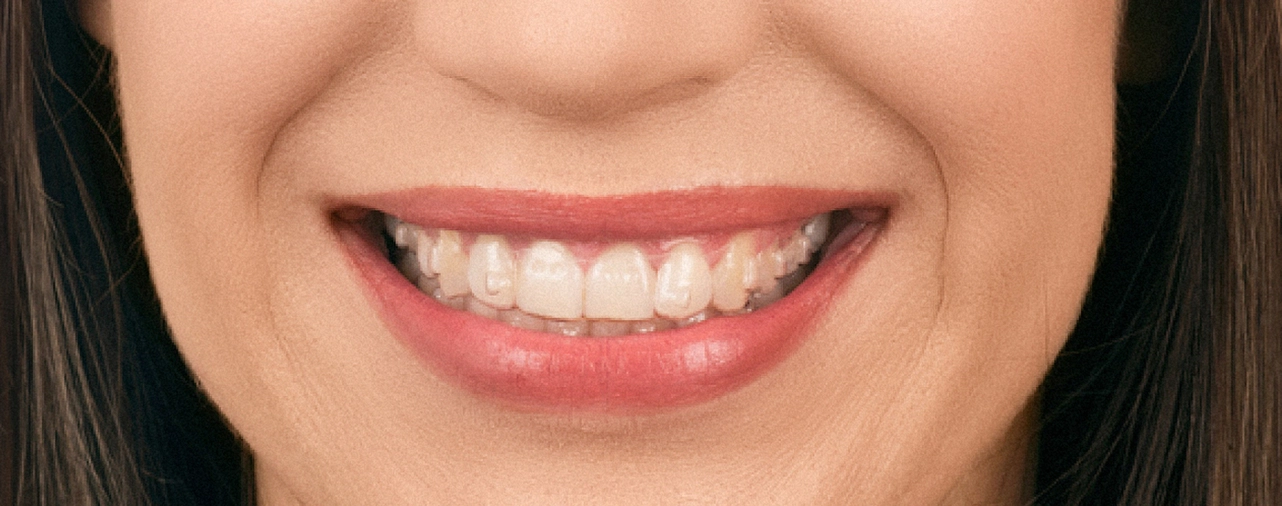
- Aligners are almost invisible to others
- You can eat, smile, and live without restrictions
- We show your future smile even at the diagnostic stage
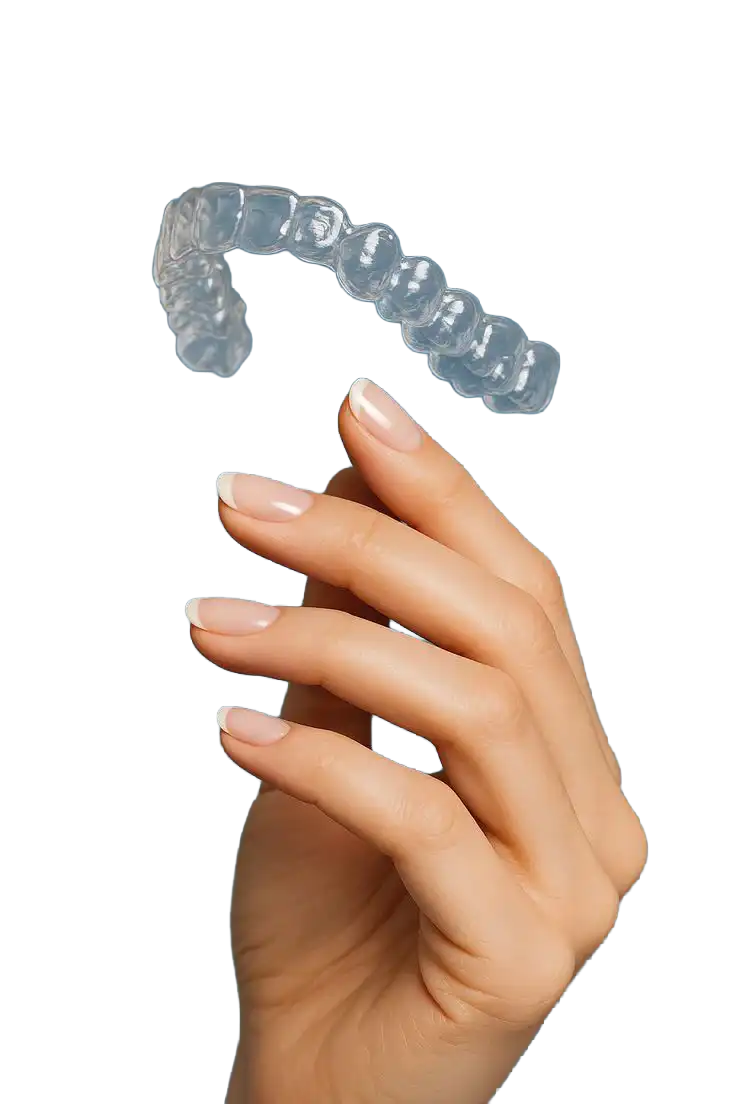
Ordoline Aligners
Clear removable aligners, designed for comfort and flexibility in everyday life. They provide more comfortable oral hygiene and minimally impact your lifestyle, but require disciplined wearing to be effective. In some clinical cases, other orthodontic techniques may be used to ensure precise tooth movement.
Almost invisible during treatment
Usually accompanied by less pain and discomfort
Improved oral hygiene and up to 4 times less plaque accumulation
Lower risk of enamel demineralization
Fewer clinic visits, fewer unscheduled visits, and less time in the chair are required.
Treatment duration is comparable or shorter in mild and moderate cases
Information used was taken from ordoline.com

Indications
Aligners are not suitable for every clinical situation, but when properly selected, they allow for gentle and predictable tooth repositioning. We recommend wearing mouth guards for the following conditions:
- Mild to moderate crowding of teeth. When teeth lack space, they "collapse" into each other. Aligners gently and consistently create the necessary space, returning each tooth to its proper position and aligning the dental arches.
- Spaces between teeth. Aligners are effective in closing gaps between teeth if the gaps are not too large and are not associated with frenulum pathology or severe bite anomalies.
- Malposition of individual teeth. Rotations, slight tilts, forward/backward shifts—all within the capabilities of these aligners.
- Relapse after orthodontic treatment. Sometimes teeth begin to shift again after wearing braces. Aligners are a comfortable way to restore your teeth to their ideal position without having to return to fixed appliances.
- Mild malocclusions. In some cases, aligners can correct shallow distal and mesial displacements, superficial open bites, and minor cross contacts, but bite correction with trays always requires an accurate diagnosis. Moderate and severe malocclusions are corrected with braces and other methods.
Contraindications
Like any technique, aligners have their limitations. Most contraindications are relative, not absolute. We offer another option for bite correction if the following contraindications are present:
- Severe malocclusion. When complex root movements, significant arch widening, or jaw position correction are required, aligners cannot provide a predictable result.
- Severe tooth rotations and large vertical movements. Aligners are poor at handling tooth rotation and up/down movement—these tasks are better performed with braces.
- Missing teeth. Trays require anchor points to work. If there are too few teeth, the aligners simply have nothing to hold onto to move the teeth.
- Inability to comply with the wearing regimen. Aligners only work if they are in your mouth 21-22 hours a day. If your lifestyle or habits make it impossible to wear aligners for that long, the effectiveness of treatment will be low. In such cases, the orthodontist will suggest an alternative that is better suited for you and will provide a more reliable and predictable result.
Prices for aligner treatment in Jūrmala
- Intraoral 3D scanning70 €
- Creating a treatment plan with aligners150 €
- Ordoline Basic - one jaw1200 €
- Ordoline Basic - Two Jaws1400 €
- Ordoline Standard — one jaw1600 €
- Ordoline Standard — Two Jaws2000 €
- Ordoline Advanced — one jaw3000 €
- Ordoline Advanced — Two Jaws3200 €
- Retainer after aligner treatment250 €
Answers to frequently asked questions
We've collected what patients ask most frequently. Didn't find the answer?
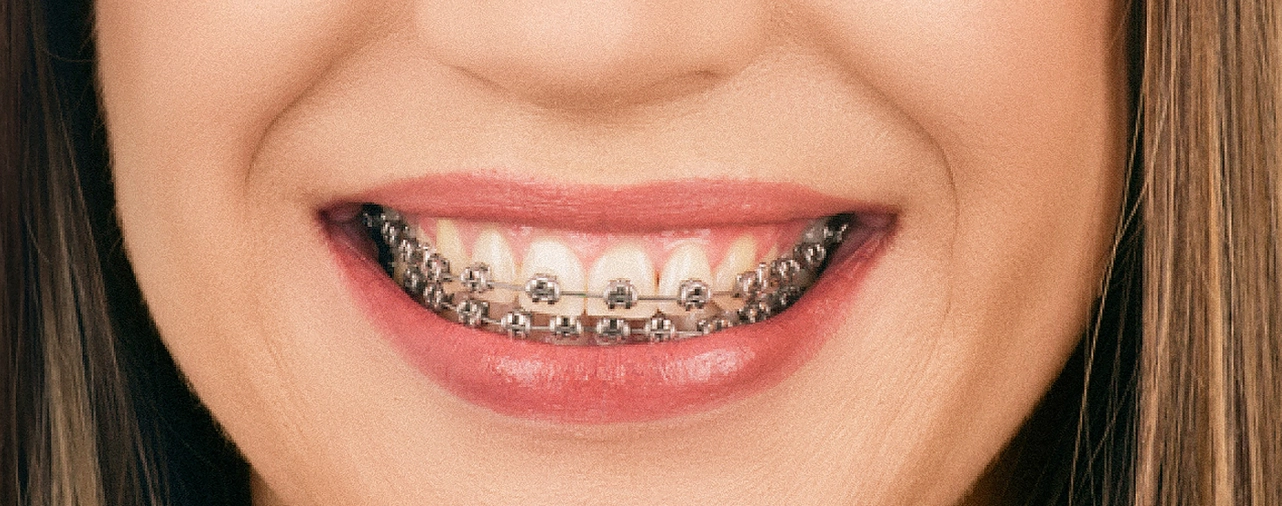
Almost invisible: the trays are transparent and conform to the shape of the teeth. This is the main difference from braces, which are visible throughout the treatment and are often perceived as a less aesthetically pleasing solution.