




- Restoring a beautiful, confident smile
- Helping you chew properly again
- Placing implants gently and painlessly for over 15 years
- Extended warranty of up to 8 years on the implant with its crown
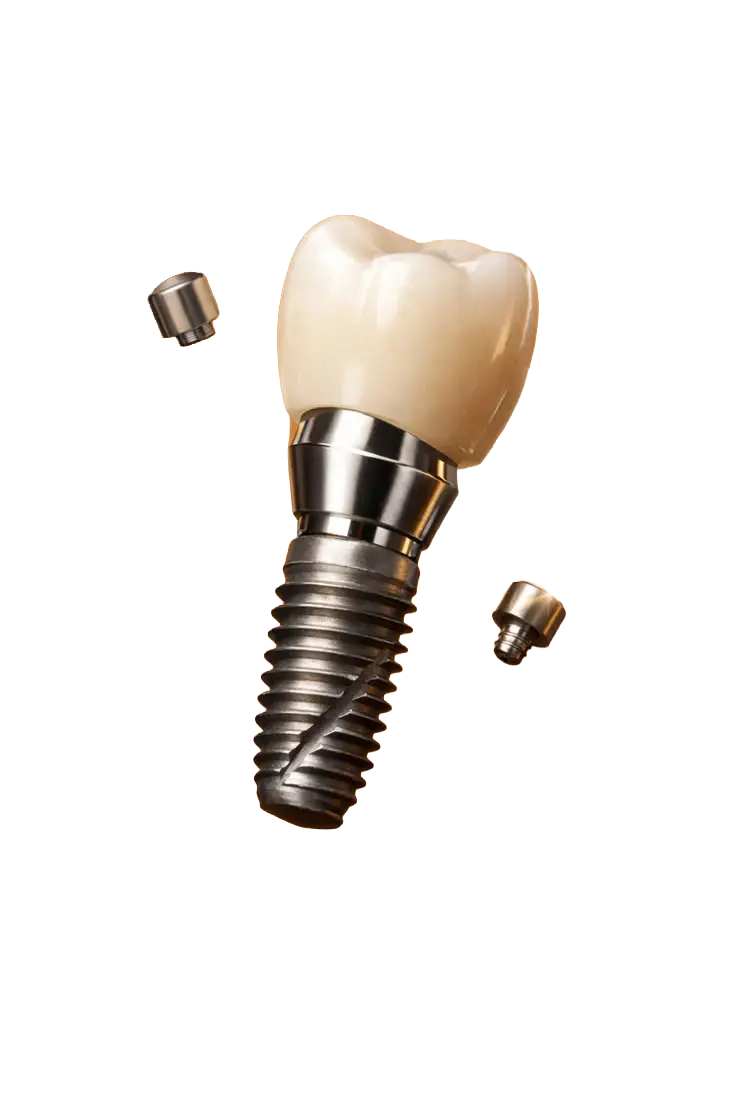
Types of implant treatment
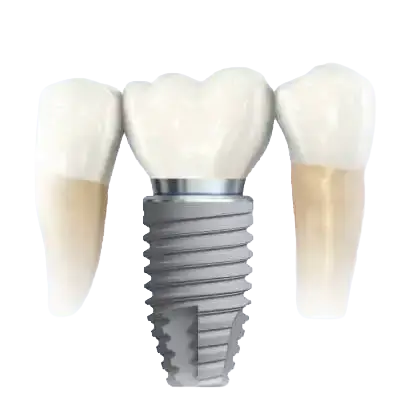
Standard implant placement for a single missing tooth
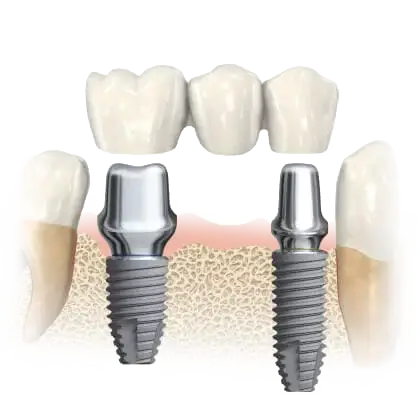
Implants replacing several missing teeth
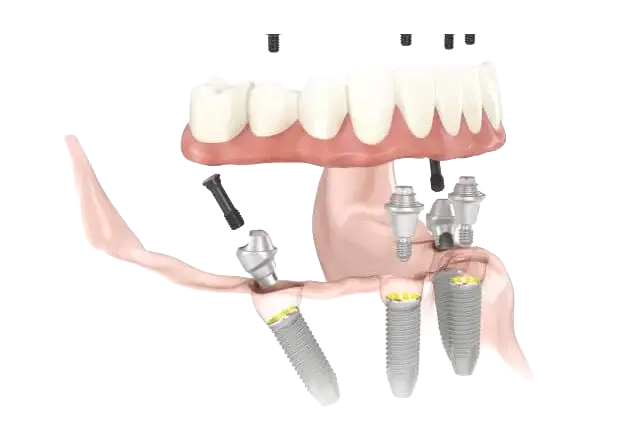
A full dental arch on four or six implants

Why implant treatment should not be postponed
After a tooth is lost, the bone atrophies — it decreases in volume.
The adjacent teeth start to shift, setting off a process that slowly but surely leads to the loss of several neighbouring teeth in both jaws.
The two-stage dental implant procedure step by step
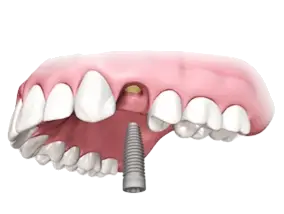
Implant Placement
The surgeon prepares the site and places the implant in it. The placement itself takes about 25 minutes; preparation, anaesthesia, and suturing add roughly another 30 minutes. Osseointegration usually takes 3 months in the lower jaw and 4–6 months in the upper jaw.
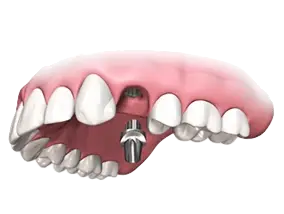
Placing the healing abutment
Once the implant has integrated, a healing abutment is fitted. The gum shapes itself around it, and this soft-tissue contour is what makes the future crown look natural.
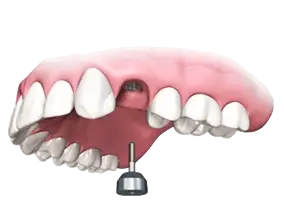
Designing and making the crown
Impressions are taken with a transfer coping that records the position of the implant in the jaw. Dental models are cast from the impressions, and the permanent crown is made from them.
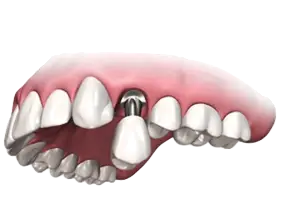
Fitting the crown on the implant
The healing abutment is removed, the final abutment is fitted in its place, and the permanent crown is secured on it. From this appointment on, the tooth takes its full share of chewing.
- Choosing an implant keeps the adjacent teeth healthy: they do not need root canal treatment or to be ground down for a bridge.
- An implant immediately relieves the adjacent teeth, protects them from occlusal overload, and extends their service life.
- When the implant is placed correctly, bone loss in that area stops.
Indications and contraindications for dental implants
Dental implants are used when a missing tooth or teeth need to be restored in the most physiological way — preserving the healthy adjacent teeth, the bone, and the bite.
Indications for dental implants
- A single missing tooth. An implant is the best option when one tooth is lost. The implant replaces the root and the crown restores the shape and function of the tooth, with no need to grind down healthy adjacent teeth as a bridge would require.
- Several missing teeth. When two or more teeth are lost, implants restore the dental arch without removable appliances and without overloading the remaining teeth.
- A completely edentulous jaw. Implants are used to support fixed or semi-fixed dentures. This restores full chewing function, clear speech, and everyday comfort.
Contraindications for implant treatment
Before implant treatment the doctor assesses the patient's general health and the condition of the oral tissues. This is what makes the treatment safe and predictable.
Relative contraindications
In these cases implants are placed after preparation or after the condition has been brought under control:
- acute inflammation in the oral cavity — implants are placed after the mouth has been treated;
- pregnancy — elective surgery is postponed;
- insufficient bone volume or density — bone grafting is performed first;
- smoking — it worsens the healing prognosis, so cutting back during treatment is advised;
- controlled diabetes — implants are possible when blood sugar is stable;
- chronic conditions in remission — the decision is made case by case.
Absolute contraindications
Implants are not placed in conditions that impair tissue healing: uncontrolled diabetes, bisphosphonate therapy, ongoing chemotherapy or radiotherapy, severe blood clotting disorders, and other serious systemic diseases.
Important: every clinical case is considered individually. In many situations implant treatment remains possible once the proper preparation has been done.
Crown options for implant restorations
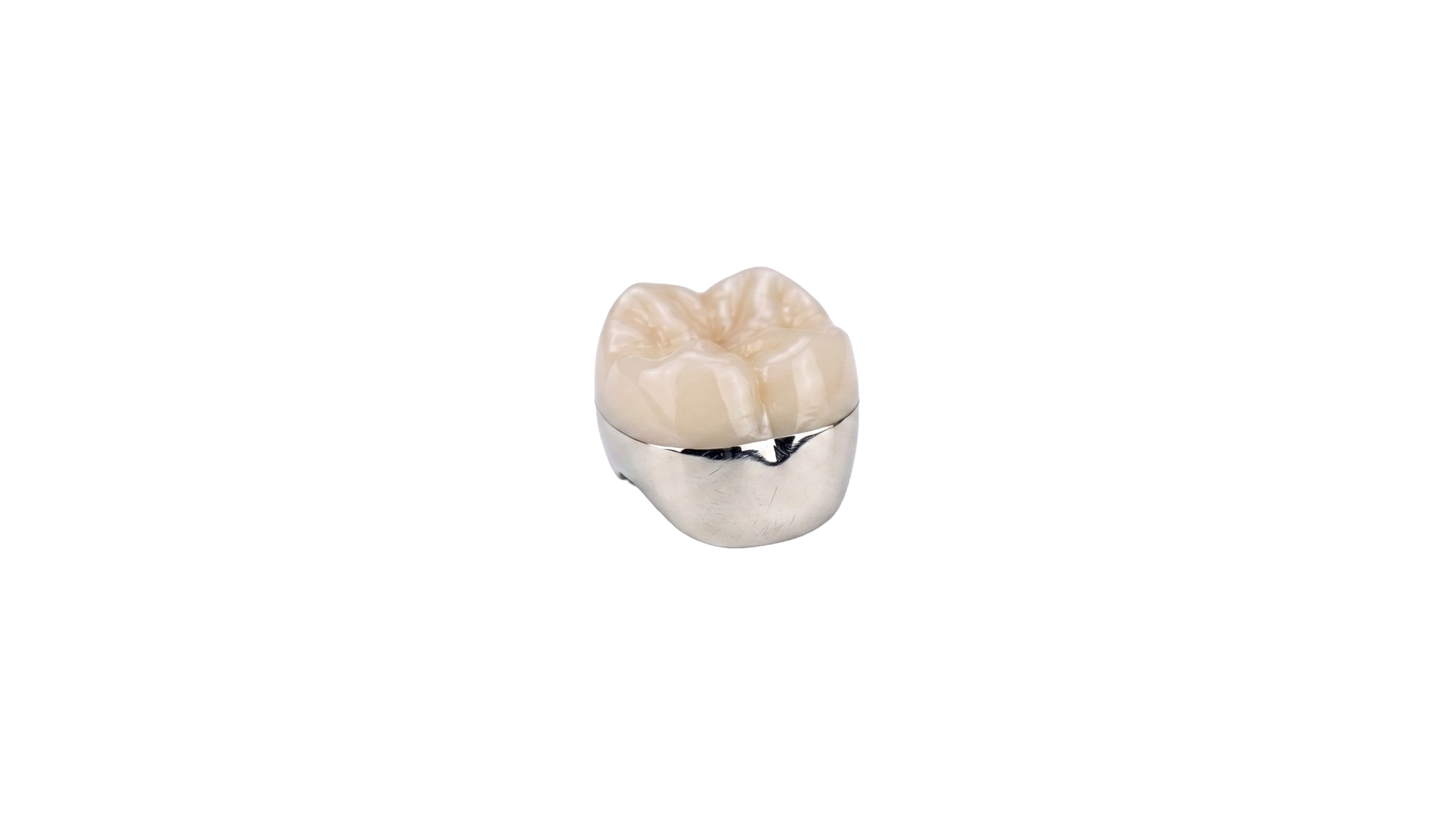
Functional
restoration with a metal-ceramic crown
The best choice for restoring chewing teeth.
- preliminary radiographic diagnostics
- preparation of the site (isolation and anaesthesia)
- the implant and its placement by an experienced surgeon
- the healing abutment and its placement
- impressions of the dental arch
- titanium abutment
- a metal-ceramic crown
- seating and cementing the crown
- a series of follow-up check-ups
- warranty
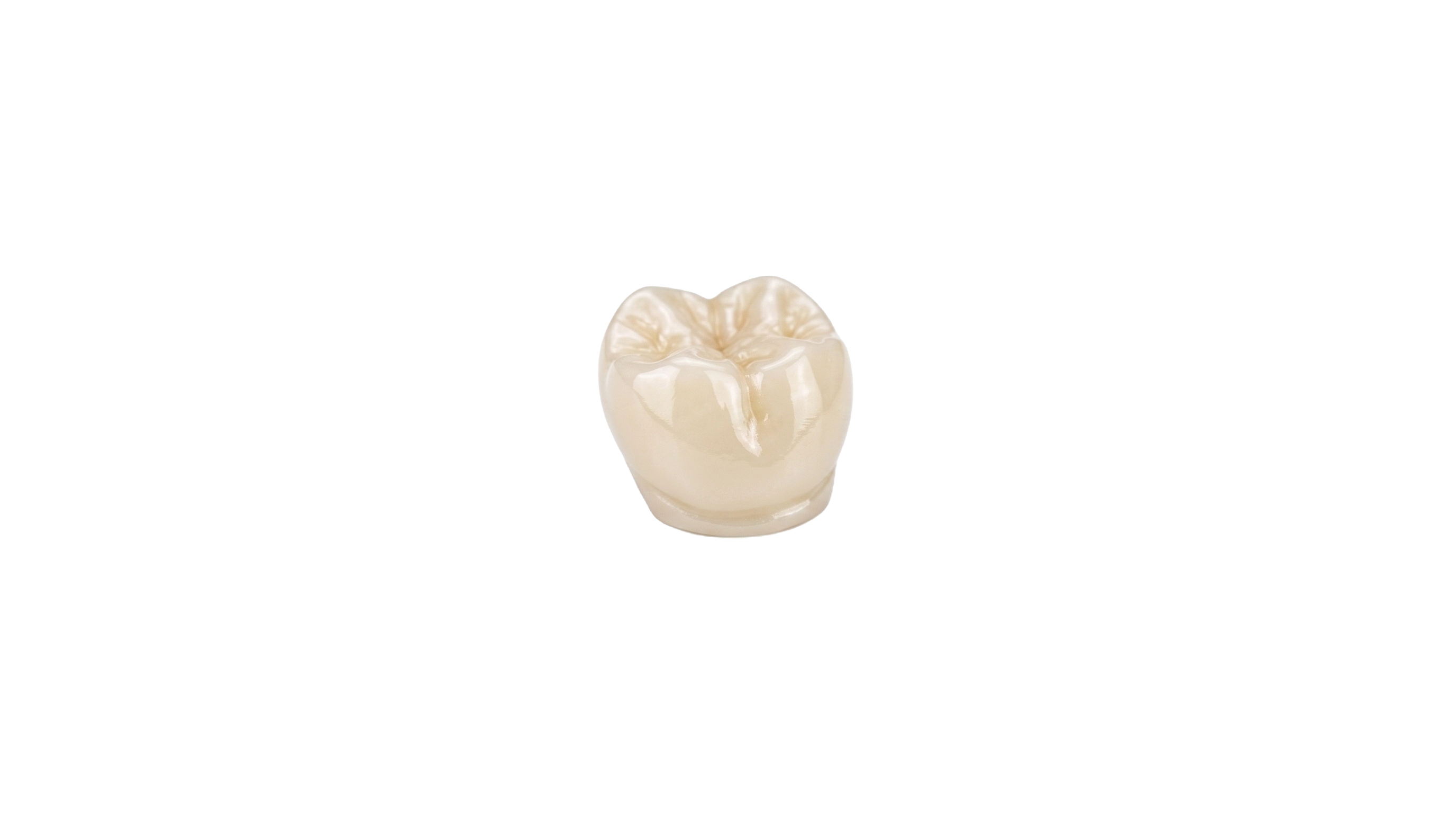
Aesthetic
restoration with a zirconia crown
A universal solution: suitable for chewing and front teeth, single crowns, bridges, and full-arch restorations.
- preliminary radiographic diagnostics
- preparation of the site (isolation and anaesthesia)
- the implant and its placement by an experienced surgeon
- the healing abutment and its placement
- impressions and 3D modelling of the dental arch
- 3D design of a custom crown
- titanium base
- a crown milled from zirconia to the 3D model
- seating and screw-retaining the crown
- a series of follow-up check-ups
- warranty
Highly aesthetic
restoration with a custom zirconia abutment and an e.max crown
For maximum aesthetics in the smile zone.
- preliminary radiographic diagnostics
- preparation of the site (isolation and anaesthesia)
- the implant and its placement by an experienced surgeon
- the healing abutment and its placement
- impressions and 3D modelling of the dental arch
- titanium base
- 3D design of a custom abutment and crown
- a zirconia abutment milled from a custom 3D model
- an e.max ceramic crown made to the 3D model
- seating and cementing the crown
- a series of follow-up check-ups
- warranty
Dental implant prices in Jūrmala
- Root implants + metal-ceramic crown1100 €
- Root Implants + Zirconium Crown1450 €
- Megagen (Korea) implants + metal-ceramic crown1250 €
- Megagen implants (Korea) + zirconium crown1600 €
- Straumann implants (Switzerland) + metal-ceramic crown1500 €
- Straumann implants (Switzerland) + zirconium crown1850 €
Charged in addition to the implant
- Zirconium crown on an implant with a custom abutment1100 €
- Gum former85 €
You can estimate the cost of your own case with the price calculator for implantation: choose the implant system, the crown, and the teeth to be restored.
Answers to frequently asked questions
We've collected what patients ask most frequently. Didn't find the answer?
The price depends on the implant system and the type of crown. An implant with a metal-ceramic crown costs from €1,100 with the Root system, €1,250 with Megagen, and €1,500 with Straumann; with a zirconia crown the prices are €1,450, €1,600, and €1,850 respectively. The healing abutment is charged separately at €85. The exact plan and total are set by the doctor after an examination and a CBCT scan.